A Dignified Way: Raising the Standards of Classroom Discipline

•December 11, 2012 • Leave a Comment

This is a webinar that that I did for the Islamic Teacher Education Program. I presented standards of true discipline (i.e. guiding student behaviour) based upon the Discipline with Dignity framework, which emphasizes dignified conduct by the teacher. DWD was a term first coined by Mendler and Curwin for students who were at-risk.

These standards, originally developed by Mendler and Curwin as outcomes of the Discipline with Dignity model, in this presentation, also draw upon the teaching methodology of the Prophet Muhammad (may God bless him and grant him peace) in perfecting good character, as well as best practices in discipline as found in contemporary models of education.

With a focus on the aims of Islamic education, Muslim educators can authentically apply these standards within a modern context, and thus, bring students closer to the prophetic model of behaviour and conduct in the family, in the community and with God.

I cover three core topics in A Dignified Way:

An introduction to the Discipline with Dignity model (DWD)
The 8 standards of practice for any classroom
How to model the behaviour you want to see in your students

Understanding DWD

•December 11, 2012 • Leave a Comment

Discipline with Dignity: A Classroom Behavioral Model by Richard Curwin and Allen Mendler

“Discipline with Dignity focuses on long-term behavioral change, rather than quick fixes. Instead of basing the model on obedience, Curwin and Mendler have chosen to base the model on responsibility. Consequently, Discipline with Dignity is not founded on rewards and punishments but on values – the idea of learning right from wrong in any setting, not just school.

Curwin and Mendler have twelve guidelines for effectively utilizing Discipline with Dignity in your classroom.”

Read the full article here.

Humanizing the Child

•December 11, 2012 • 2 Comments

“I’ve come to the frightening conclusion that I am the decisive element in the classroom. It’s my daily mood that makes the weather. As a teacher, I possess a tremendous power to make a child’s life miserable or joyous. I can be a tool of torture or an instrument of inspiration. I can humiliate or humor, hurt or heal. In all situations, it is my response that decides whether a crisis will be escalated or de-escalated and a child humanized or de-humanized.”

Dr Haim Ginott, author of   Between Parent & Child

100_1729

What makes your classroom Islamic?

•December 10, 2012 • Leave a Comment

Upcoming free webinar on the Islamic Learning Environment:

“Are your students getting a different experience than they would in a public school?

Every well intentioned Islamic school teacher has asked themselves this question.

You integrate Islamic perspectives into your lessons whenever you can. You use teaching strategies that you’ve learned from Prophetic traditions. You do your best to teach in a way that is consistent with Islamic values.

But you know you could be doing more. As hard as you try — it all feels superficial, sporadic, and inconsistent. You even wonder if there’s any meaningful difference between your classroom and that of a public school.

What is an Islamic learning environment? It’s every Islamic school teacher’s dream — to create a learning environment that is authentically Islamic in every way. But where do you begin? And what does an Islamic learning environment look like anyway?

In this webinar, Dr. Nadeem Memon of the Islamic Teacher Education Program,  will describe what an Islamic learning environment looks like in today’s Islamic school. He’ll explain how each aspect of the learning environment can be made Islamic and the impact this will have on the learning experience of students.”

Attention span

•December 10, 2012 • Leave a Comment

302819_10151362479016095_1041087662_nImage source can be found at Kinza Academy

Bullets to Butterflies: An Initiative towards Education for All

•December 10, 2012 • Leave a Comment

“This art exhibit is the artistic expression of three Canadian artists in response to the life struggles of Malala Yousufzai.  Malala is a 14 year old school girl who has changed the world with her courageous efforts in encouraging education for girls in Pakistan.  Her voice has represented many girls who cannot speak for themselves as they faced the rules and edicts of the Taliban in Northern Pakistan.

Her efforts have afforded her positive international attention, and have also elicited negative responses from those who oppose her message of equal opportunities for education for girls.  On October 9th, Malala Yousufzai was shot in the head in a targeted attack by the Taliban on her school bus.  Since this date, Malala’s message has reached a worldwide audience.  The shooting and her message has inspired the world to act, and spread the message of Malala – to make education accessible to all children, regardless of gender.”

Butterfly Logo


Here is the information for anyone who would like to support this important cause:

BULLETS TO BUTTERFLIES – ART EXHIBIT

Gardiner Museum
111 Queens Park, Toronto ON
M5S 2C7

Tickets $10
Friday, December 28, 2012
6:30pm – 8:30pm

More information can be found at Bullets to Butterflies.

Step 5: Philosophical Underpinning of Curriculum

•December 7, 2012 • Leave a Comment

“The final step of the Integrating Islam: 5 Steps to Effective Curriculum Integration series. The series finale is titled  ‘Philosophical Underpinning of the Curriculum‘.

In the context of colonial schools and post-colonization, Step 5 takes us back to the foundation of curriculum and its current underlying philosophy. Based on Dr.Freda Shamma’s paper “The Curriculum Challenge for Islamic Schools in America“, Dr. Nadeem identifies 7 questions we need to think about when designing and teaching our school curricula.”

http://islamicteachereducation.com/integrating-islam-step-5/

Here are Steps 1 through 4 of Integrating Islam into your Muslim school curriculum:

Step 1: Learning Outcomes

Step 2: Instructional Methods

Step 3: Curriculum Content and Resources

Step 4: Assessment

Full Capacity Learning

•December 7, 2012 • Leave a Comment

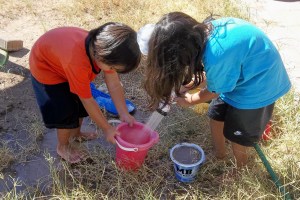
“Traditional preschool approaches employ classroom based, adult-led activities with very specific outcomes as the framework for learning, and outdoor free play as a break from those activities. At Tumbleweed, open-ended and child-led exploration occupies most of the childrenʼs time. The teachers’ roles are to support and scaffold each child’s learning instead of dictate or control it. As such, what looks like children are just “blowing off steam”, running, jumping, climbing, and shouting out here, they are actually doing everything else as well, learning at full capacity. “

Found in this awesome post here from Tumbleweed Infant House.

100_1539

Key to happiness

•December 7, 2012 • Leave a Comment

Wise Words From John Lennon

Image source can be found here.

Living Right

•December 6, 2012 • Leave a Comment

Lessons for a sincere teacher.

 
Zeyneb Sayılgan

Muslim Reflections On Our Human Journey

MAMANUSHKA

Faith, Motherhood, Culture, Resources, Food & Life

Identity Crisis

Indigenous, Latinx, Muslim, Feminist

Fig & Olive

Increased Stations

Alfie Kohn

The Work Of Alfie Kohn

Meri Cherry

Adventures in Process Art

gadflyonthewallblog

"To sting people and whip them into a fury, all in the service of truth."

Splendid Pearls

Orthodox Sunni Islam

My Patronus Is Coffee

Life is Messy. Send Coffee and Posh.

Baraka Birth

birth doula | fertility support | women's health

the CHILD centered

where parent and teacher CONNECT

Praying With One Eye Open

Thoughts on motherhood, the writer life, and staying awake

TED Blog

The TED Blog shares news about TED Talks and TED Conferences.

dr. p.l. (paul) thomas

educator, public scholar, poet&writer - academic freedom isn't free

An Ethical Island

How to Teach Without a Lecture and other fun

The Finer Points

A Blog About All Things Fine Arts at the University of Utah.